
A retail customer experiences your brand long before completing a purchase. They may first see a storefront, product display, social media post, advertisement or online listing. Effective retail branding connects these moments into one recognisable experience, helping customers understand what your store offers and what makes it worth considering.
In Saudi Arabia, retailers often need to communicate across physical branches, e-commerce, delivery platforms and social channels. A strong identity must work consistently across all of them without making the shopping experience complicated. Our brand identity service helps businesses turn their positioning into a practical visual system that customers can recognise.
Why retail branding matters for Saudi stores
Retail is competitive, and customers have many ways to compare products, prices, convenience and service. A clear brand gives people a reason to remember your store beyond a single transaction. It also helps your team make consistent decisions about presentation, communication and customer service.
A well-developed retail identity can help you:
- Create recognition: Make your store identifiable across signage, packaging, social media and digital storefronts.
- Clarify your offer: Communicate what you sell, who you serve and what kind of shopping experience customers can expect.
- Build familiarity: Use consistent visual and verbal cues across repeat visits and different channels.
- Support customer confidence: Present products, policies and service information in a clear, professional way.
- Coordinate expansion: Maintain a recognisable experience when opening new branches or adding sales channels.
- Guide your team: Give employees practical standards for displays, promotions, packaging and customer communication.
A brand does not compensate for poor products, confusing pricing or unreliable service. Its role is to make the value of a good retail experience easier to understand and recognise.
Start with retail positioning before visual design
Before choosing colours or designing a logo, decide what place your store should occupy in the customer's mind. A neighbourhood grocery, a fashion boutique, a homeware retailer and a specialist electronics store need different brand strategies.
Answer these questions first:
- Who is your customer? Define the audiences you want to serve, including their shopping needs, preferences and buying context.
- What do you sell? Identify your main product categories and the role of supporting categories.
- Why would someone choose your store? Consider product selection, convenience, service, expertise, accessibility or a distinctive shopping environment.
- What should the experience feel like? Decide whether the brand should feel practical, welcoming, premium, energetic, specialist or something else.
- What should customers remember? Express the store's value in a simple idea that can guide design, content and service decisions.
For example, a hypothetical homeware retailer may focus on helping customers make practical choices for everyday living. A fashion store may build its position around a carefully selected collection and a distinctive in-store experience. These directions should reflect the actual offer, not an image the business cannot deliver.
Your positioning also needs to account for the business model. A single-location shop may rely heavily on local recognition, while a retailer selling through branches and e-commerce needs a system that works across different customer journeys. A clear brand strategy can help establish this direction before the identity is developed.
Build a recognisable retail visual identity
The visual identity should make the store easy to recognise while helping customers navigate its products and environment. It needs to work on a shopfront, shopping bag, product label, website, mobile screen, delivery packaging and promotional material.
Logo and store recognition
A retail logo should be distinctive, legible and adaptable. It should not depend on intricate details that disappear on small product labels or become difficult to read on storefront signage.
Test the logo in practical settings:
- Does it remain readable from the street and at small digital sizes?
- Can it work in one colour for receipts, labels and simple packaging?
- Does it look appropriate on shopping bags, uniforms and delivery materials?
- Is it suitable for the product categories and customer audience?
- Is it distinguishable from competitors and existing registered marks?
Avoid choosing a logo only because it looks fashionable in a presentation. The right design should remain useful as the business grows and its applications become more varied.
Colour, typography and graphic elements
Colours influence how a store is perceived, but there is no universal palette for retail. A specialist technology retailer may need a different visual language from a children's store or a premium homeware brand.
Choose a palette that supports the intended positioning and remains consistent across print and screens. Check contrast, readability and reproduction on different materials. Typography should also be practical: product names, prices, category labels and promotional messages need to be easy to scan.
Create a supporting graphic system for icons, patterns, illustrations and layouts. These elements can make the brand more recognisable, but they should help organise information rather than compete with products.
Photography and product presentation
Product imagery is a major part of the retail experience. Use consistent lighting, backgrounds, framing and image quality so customers can compare products without distraction. Lifestyle photography can show how an item is used, while detailed images should communicate relevant features accurately.
Do not use images that misrepresent product colour, size, materials or included accessories. Visual consistency should never come at the expense of honest product information.
Make the physical store part of the brand
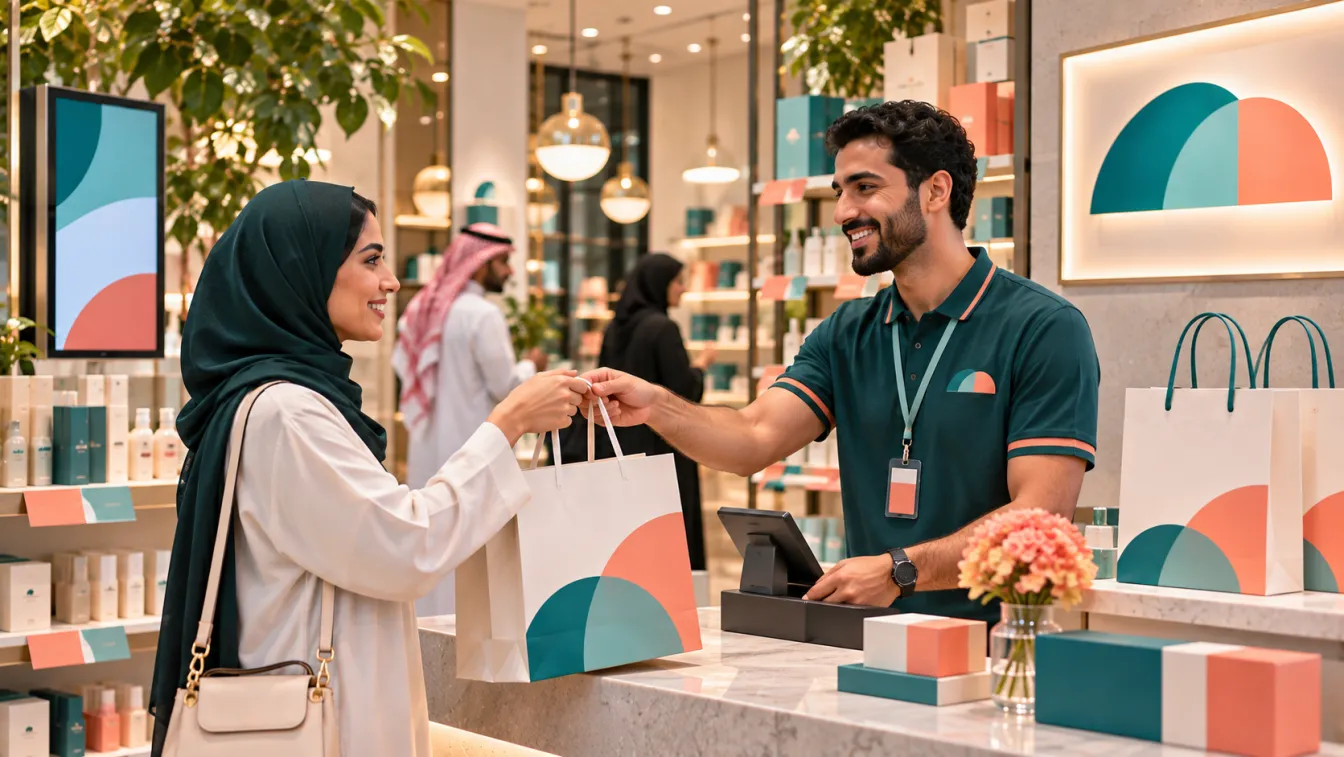
A store is not simply a location where the logo is displayed. Its layout, signage, lighting, fixtures, displays and staff interactions all influence how customers experience the brand.
Consider the main parts of the physical journey:
- Exterior: Is the storefront easy to identify? Does the signage communicate the store name and category clearly?
- Entrance: Can customers understand where to go and what the store offers as they enter?
- Navigation: Are departments, categories and promotional areas easy to find?
- Product displays: Are products presented in a way that reflects the brand and makes comparison straightforward?
- Checkout: Are payment, returns and collection processes explained clearly?
- Staff interactions: Does the service style match the tone and expectations communicated by the brand?
A premium-looking interior is not automatically a better retail environment. The design should support the store's positioning and customer needs. A practical neighbourhood retailer may benefit more from clear navigation and convenient displays than from expensive decorative features.
Connect packaging, delivery and after-sales communication
For many retailers, the brand experience continues after a customer leaves the store. Shopping bags, product packaging, delivery boxes, order confirmations, return instructions and customer support messages all contribute to the overall impression.
Create a consistent approach for these touchpoints:
- Use the same logo, colours and typography across packaging formats.
- Make product labels clear and ensure required product information remains readable.
- Keep order confirmation and delivery messages consistent with the brand's tone.
- Explain returns, exchanges and warranty processes in straightforward language.
- Use packaging that is suitable for the product and practical for storage and transport.
- Make customer support contact details easy to find.
Packaging should not be treated as decoration alone. It must protect the product, support handling and communicate any necessary information. Where product categories are subject to specific labelling or packaging requirements, confirm the applicable requirements with qualified advisers and relevant authorities.
Keep the online and offline experience consistent
Many customers move between digital and physical channels. They may discover a product on social media, check details on the website, visit a branch and later place another order online. The brand should remain recognisable throughout this journey.
Your e-commerce store should use the same identity as your physical locations. Keep product photography, category names, promotional language and customer support information consistent. Make sure stock availability, delivery details and return policies are clear and current.
Social media should also reflect the brand's positioning. Use a recognisable visual style, but adapt content to the platform. A retailer might publish product demonstrations, new arrivals, styling ideas, store updates or answers to common questions. Avoid turning every post into a sales promotion; useful content can help customers understand products and make informed choices.
If you operate several branches, provide a shared system for local content. Branch teams can communicate local updates while using approved templates, brand language and visual standards. This gives each location room to be relevant without making the business look like several unrelated stores.
Retail branding in the Saudi market
Saudi retailers serve customers with different preferences, languages and shopping habits. Your identity should reflect the audience and locations you actually serve rather than relying on generic assumptions about the market.
Arabic should be considered from the beginning when it is a core customer language. Test Arabic typography, right-to-left layouts, product labels, category navigation and promotional designs in their real applications. If the business also serves English-speaking customers, develop a bilingual system that maintains consistency without forcing both languages into unsuitable layouts.
Local context matters too. A retailer operating in Riyadh may have different branch formats and customer journeys from one focused on Jeddah or the Eastern Province. A branding agency in Riyadh should understand how to express a retailer's offer across its local customer touchpoints, while a branding agency in Jeddah should consider the same questions for its relevant locations and channels. Use location references accurately and avoid implying that the store has branches or delivery coverage where it does not.
Retailers should also ensure that product descriptions, promotions, pricing displays, consumer information and any regulated product claims comply with applicable requirements. The details can vary by product and business activity. Confirm specific obligations with the relevant Saudi authorities and qualified legal or compliance advisers rather than relying on a design or marketing team to interpret them.
Create a retail brand guidelines manual
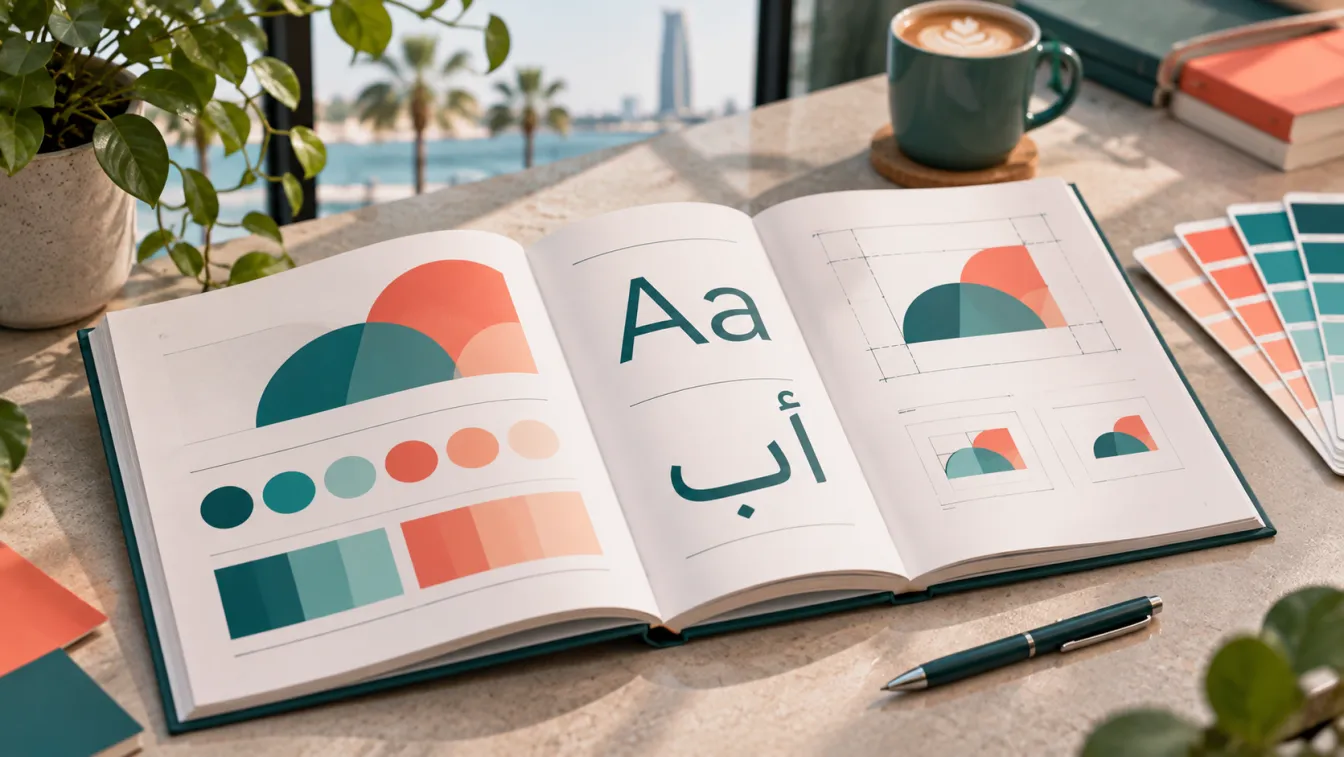
A brand guidelines manual helps store teams, designers, suppliers and marketing partners apply the identity consistently. It should be practical enough to use during daily operations, not simply a presentation of design concepts.
Include the following elements:
- Brand foundation: Positioning, customer audience, personality, values and key messages.
- Logo rules: Approved versions, clear space, minimum sizes, backgrounds and incorrect applications.
- Colour system: Primary and secondary colours with print and digital specifications.
- Typography: Arabic and English font choices, hierarchy and usage examples.
- Photography: Product image standards, lifestyle direction and image selection principles.
- Graphic elements: Icons, patterns, illustrations and layout rules.
- Store applications: Exterior signage, interior signs, display materials, uniforms and promotional areas.
- Retail materials: Shopping bags, labels, packaging, receipts and customer documents.
- Digital applications: Website, e-commerce, social media and advertising templates.
- Communication style: Tone of voice, preferred terminology and customer-facing message examples.
Provide ready-to-use templates for recurring needs such as product announcements, seasonal campaigns and branch updates. Clear examples reduce inconsistent interpretation and make the identity easier to manage as the business expands.
Common retail branding mistakes to avoid
A retail identity can lose impact when the business focuses on appearance without considering the whole customer experience. Watch for these problems:
- Copying another retailer: Competitor research is useful, but imitation makes your store harder to distinguish.
- Changing the design across channels: Different logos, colours or product styles create confusion between branches and online platforms.
- Ignoring the store environment: A good social media identity cannot compensate for unclear signage or difficult navigation.
- Overdesigning promotional materials: Too many fonts, colours and messages make offers harder to understand.
- Using inconsistent product photography: Different image styles can make an online catalogue feel disorganised.
- Treating Arabic as an afterthought: Poorly planned bilingual layouts can affect readability and customer confidence.
- Making promises the operation cannot support: Promotions, delivery claims and service messages must reflect what the business can actually provide.
When should a retailer rebrand?
A retailer may need a rebrand when its product categories change, it moves into a new customer segment, it expands into new locations or its existing identity no longer reflects the experience it provides. A rebrand may also help when several branches have developed inconsistent signage, displays and communication styles.
However, a complete identity replacement is not always necessary. If customers already recognise the store and the positioning remains relevant, a focused refresh may be more appropriate. You might update the logo system, improve store signage, standardise packaging or rebuild the e-commerce experience while retaining familiar brand elements.
Do not rush into a major rebrand while the product range, business model or expansion strategy is still changing. Resolve those decisions first. Otherwise, the new identity may need another round of changes before it has been properly introduced.
How to approach a retail branding project
A successful project connects the business strategy with the physical and digital customer experience. Before design begins, agree on the business objectives, project scope, decision-makers and the locations or channels that need to be included.
A practical process looks like this:
- Retail brand audit: Review the current identity, stores, product presentation, customer communications, website and social channels.
- Customer and market understanding: Identify priority customer groups, competitors, shopping needs and the retailer's actual strengths.
- Positioning: Define what the store should be known for and the experience it intends to deliver.
- Creative direction: Explore visual concepts that suit the positioning and work across store and digital applications.
- Identity development: Finalise the logo, colours, typography, graphic elements and core templates.
- Touchpoint design: Apply the identity to storefronts, interiors, packaging, e-commerce, social media and customer communications.
- Guidelines and rollout: Deliver usable brand rules, templates and an implementation plan for branches and suppliers.
The scope depends on the retailer's current position. A single independent shop may need a focused identity and signage system, while a multi-branch retailer may need a wider architecture, guidelines and rollout plan. A discovery discussion can help establish what is genuinely required before committing to a full project.
Work with us: If your retail business needs a recognisable store identity, consistent branch presentation or a stronger connection between physical and digital shopping, explore our brand identity services. We can help translate your positioning into a practical visual system for stores, packaging, e-commerce and customer communication. You can also read our guide to brand guidelines manuals to understand how to keep your identity consistent as your business grows.
FAQ
What is retail branding? Retail branding is the process of creating and managing a store's identity across its positioning, visual design, products, physical environment, digital channels and customer experience. It helps customers recognise the business and understand what it offers.
Why is consistent branding important for retail stores? Consistency helps customers recognise the store across branches, packaging, websites and social media. It also gives employees and suppliers clear standards for presenting products and communicating with customers.
What should a retail brand identity include? It should include a logo, colour palette, typography, graphic elements, photography direction, tone of voice and applications for storefronts, interiors, packaging, product labels, e-commerce and social media.
Does a small retail shop need a complete branding project? Not necessarily. A smaller shop may need a clear position, a practical logo and identity system, and consistent signage and packaging. The scope should reflect the business's needs rather than adding unnecessary complexity.
How can a retailer keep multiple branches consistent? Create clear brand guidelines, approved templates and practical standards for signage, displays, uniforms, packaging and customer communication. Give branch teams room to share local information within the same identity system.