
Effective healthcare social media marketing helps clinics explain their services, share useful health information, and build trust with the communities they serve. In Saudi Arabia, a successful strategy must do more than publish attractive posts. It needs to communicate responsibly, respect patient privacy, reflect the clinic's medical standards, and make it easy for people to understand how to access appropriate care.
Patients may discover a clinic through Instagram, Snapchat, TikTok, or a search result shared on social media. They may then look for information about specialties, doctors, appointment arrangements, location, and available services. A clear content strategy helps a clinic answer these questions while maintaining professional boundaries.
For clinics that need coordinated planning, content production, publishing, and audience communication, explore our social media marketing and management services in Saudi Arabia. This guide explains how to build a practical healthcare content strategy that supports patient communication without treating medical care like an ordinary consumer product.
1. Define the role of healthcare social media for your clinic
Before choosing platforms or planning posts, decide what social media should help your clinic achieve. A clinic may have several objectives, but each one needs a clear communication approach.
Common objectives include:
- Helping people understand the clinic's medical specialties and services.
- Introducing the clinic's facilities, departments, and care processes.
- Sharing general health education reviewed by qualified professionals.
- Explaining how patients can request appointments or contact the clinic.
- Introducing doctors and their professional qualifications accurately.
- Addressing common questions about preparation, appointments, and clinic procedures.
- Communicating operational updates, such as changes to working hours or available services.
- Maintaining a consistent and professional public presence.
For example, a hypothetical dermatology clinic may want to explain its available specialties, introduce its medical team, and publish general educational content about skin care. These objectives require different types of content and different review processes.
Healthcare social media should not be measured only by how many people see a post. The quality and accuracy of information, the clarity of the patient journey, and the clinic's ability to communicate responsibly are equally important.
2. Understand your audience without making medical assumptions
A clinic may serve different groups of people, and their information needs can vary considerably. A parent researching pediatric services will have different questions from someone looking for a dental consultation or a specialist appointment.
Start by identifying the audiences the clinic is qualified and equipped to serve. Consider:
- The medical specialties and services offered.
- The locations and communities the clinic serves.
- The languages patients commonly use when seeking information.
- The practical questions people ask before booking an appointment.
- The information patients need to understand the clinic's procedures.
- The concerns that can be addressed through general education rather than individual medical advice.
Build audience profiles around information needs, not assumptions about a person's health, diagnosis, or personal circumstances.
For instance, a hypothetical family medical clinic may need content explaining how to contact the clinic, what services are available, and how appointment requests work. A specialized dental practice may need clearer explanations of its departments, consultation process, and available treatment categories.
Review questions received by reception and customer service teams. These conversations can reveal where people struggle to find information. Do not use identifiable patient information to create marketing content or audience profiles.
3. Build content pillars for a healthcare clinic
A content pillar is a recurring subject that gives your publishing plan structure. For clinics, the best pillars balance useful education, service information, professional credibility, and practical guidance.
Consider these content categories:
General health education
Share accessible information about health topics relevant to the clinic's specialties. Have qualified medical professionals review educational material before publication. Keep explanations clear, avoid exaggerated claims, and distinguish general information from personal medical advice.
Specialty and service explanations
Explain what each department offers, which types of consultations are available, and how patients can learn more. Use accurate service descriptions approved by the clinic.
Medical team introductions
Introduce doctors and qualified professionals using verified names, roles, credentials, and approved biographies. Professional introductions should communicate relevant experience without implying unsupported superiority or guaranteed outcomes.
Clinic experience and facilities
Show approved views of reception areas, consultation rooms, facilities, and general patient processes. Make sure photography and video production respect patient privacy and clinic permissions.
Appointment and patient guidance
Explain how to request an appointment, where the clinic is located, what contact channels are available, and what patients should know before visiting. Keep operational information updated.
Seasonal and awareness content
Plan relevant health-awareness topics around suitable occasions and seasonal needs. Ensure that the subject is appropriate for the clinic's specialties and that medical information is reviewed before publication.
These pillars help healthcare social media remain informative rather than becoming a continuous stream of promotional offers.
4. Choose the right platforms for your clinic
A clinic does not need to publish identical content on every social platform. Choose channels based on the audience, the content format, and the clinic's ability to manage conversations responsibly.
Instagram can support a visual clinic presence through educational carousels, approved facility photography, doctor introductions, short videos, and practical service information. Organize important information in highlights so visitors can find contact details, specialties, and appointment guidance.
Snapchat
Snapchat may suit short updates, behind-the-scenes content that respects privacy, clinic announcements, and concise educational messages. Establish a clear process for monitoring incoming messages and directing appointment enquiries to the appropriate channel.
TikTok
TikTok can be useful for short educational videos and answers to general questions. Medical professionals can explain concepts in accessible language, provided the content is reviewed and does not become an individual diagnosis or treatment recommendation.
X
X can support public announcements, clinic updates, health-awareness communication, and responses to general questions. Keep public replies factual and avoid discussing individual patient cases.
LinkedIn may be relevant for clinics communicating with healthcare professionals, potential employees, institutional partners, and other organizations. Content can focus on professional updates, organizational developments, and approved expertise-related information.
The right platform mix depends on the clinic's objectives and available resources. It is better to maintain a few channels responsibly than to open several accounts that cannot be monitored consistently.
5. Create a content calendar with a clear approval process
Healthcare content requires more careful coordination than many general business categories. A publishing calendar should account for content planning, medical review, brand approval, production, and scheduling.
A practical monthly process can follow these steps:
- Collect topics: Gather questions from reception, approved medical education priorities, service updates, and relevant awareness themes.
- Set content objectives: Decide what each post should explain or help the audience do.
- Assign a medical reviewer: Identify the qualified professional responsible for checking clinical accuracy.
- Prepare the creative brief: Define the format, key message, audience, language, and required visual material.
- Produce the content: Create the design, photography, video, or written copy using approved information.
- Review and approve: Complete medical, operational, and brand checks before publication.
- Schedule and monitor: Publish the approved content and monitor the resulting comments and enquiries.
- Review the month: Identify questions, content gaps, and operational information that needs updating.
Do not allow a publishing deadline to bypass medical review. If an educational claim has not been verified, delay the post or replace it with an approved topic.
For more guidance on organizing the production process, see our article on social media content calendars for Saudi businesses.
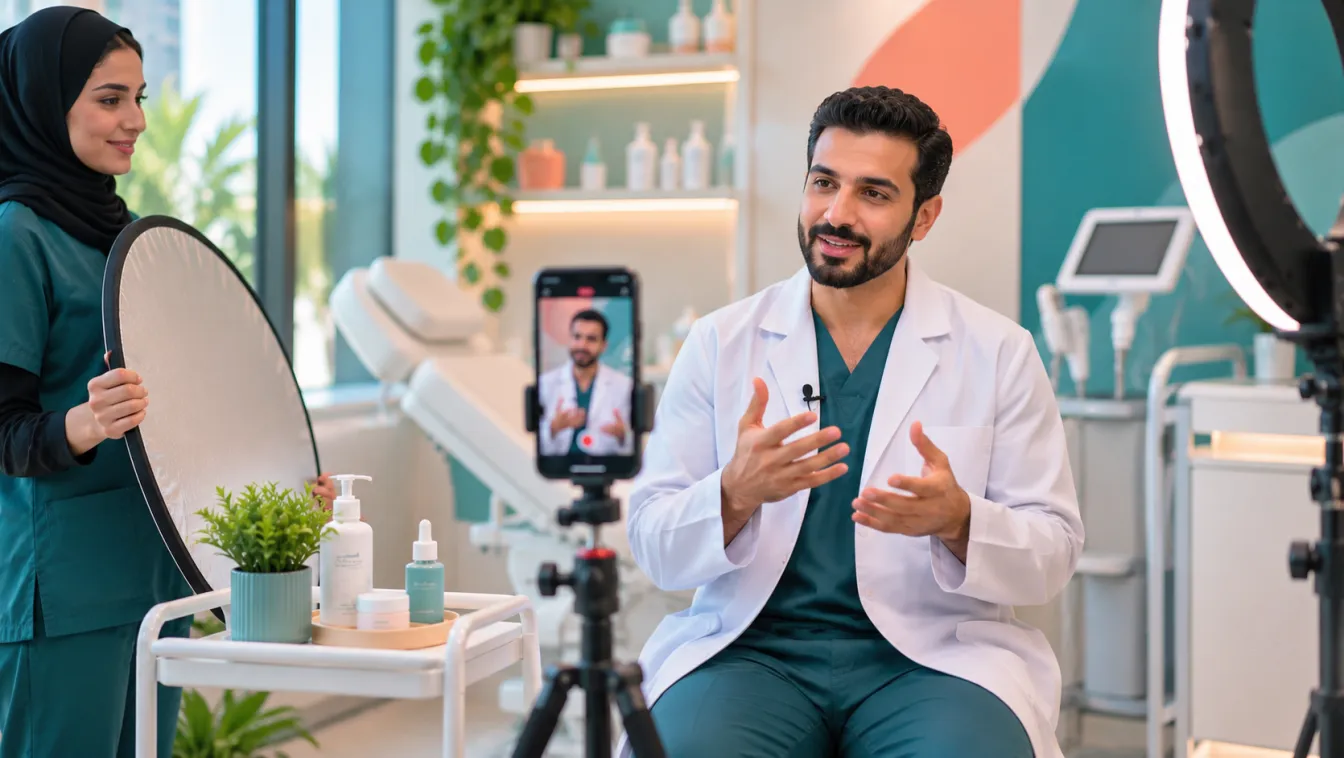
6. Use video to explain medical information clearly
Short-form video can help a clinic explain its services and make general health information easier to understand. However, medical video content needs careful scripting and review.
Useful video formats include:
- A doctor explaining a general health concept in accessible language.
- A short introduction to a clinic department or service.
- A walkthrough of approved clinic facilities without showing identifiable patients.
- Answers to frequently asked general questions.
- Explanations of appointment procedures and what patients can expect.
- Awareness messages reviewed by the relevant medical professional.
Prepare a script before filming. Confirm the medical message, terminology, speaker details, visual requirements, and any necessary disclaimers. Avoid dramatic editing or sensational headlines that distort the medical meaning.
If a video includes a doctor or another identifiable person, obtain the appropriate permission and confirm that the person is comfortable with the intended use. Patient appearances require particular care and explicit, appropriate authorization. Avoid filming patient records, screens, conversations, or other confidential information.
The purpose of healthcare video production is to improve understanding, not to promise results or pressure viewers into treatment.
7. Communicate responsibly and protect patient privacy
Trust is central to healthcare communication. A clinic's content and public responses should respect professional responsibilities, patient confidentiality, and applicable Saudi requirements.
Build a review process that addresses:
- Medical accuracy: Clinical information must be checked by appropriately qualified professionals.
- Privacy: Never reveal patient names, contact details, records, diagnoses, appointment information, or identifiable details without an appropriate legal basis and authorization.
- Testimonials and patient stories: Use only where properly authorized and reviewed under applicable professional and regulatory requirements.
- Before-and-after material: Apply careful review and obtain all necessary permissions. Do not imply that an individual outcome is guaranteed or typical.
- Advertising claims: Avoid misleading statements, unsupported comparisons, guaranteed outcomes, or claims that overstate a treatment's benefits.
- Professional representation: Present doctors, qualifications, specialties, and services accurately.
- Platform moderation: Do not use public comments to collect sensitive medical information or discuss individual cases.
Healthcare advertising and professional communication may be subject to requirements from relevant Saudi authorities and professional regulators. The clinic should confirm current requirements, approvals, and any restrictions with the appropriate authority or qualified adviser before launching campaigns or publishing regulated claims. A marketing agency should not treat general content guidance as a substitute for regulatory review.
8. Handle comments and direct messages with care
Healthcare enquiries can contain sensitive information. A social media response process must make it clear which questions can be answered publicly and which should move to an approved private channel or formal patient service process.
A useful workflow includes:
- Answering general questions about locations, working hours, and available contact channels.
- Directing appointment requests to the clinic's approved booking process.
- Avoiding diagnosis or treatment recommendations in public comments.
- Asking people not to share medical records or personal health details in public.
- Referring clinical questions to qualified medical staff through approved channels.
- Escalating complaints and sensitive matters to authorized clinic representatives.
- Following the clinic's privacy and records-handling procedures.
For example, if someone comments that they are experiencing a symptom and asks which treatment they need, the social media team should not attempt to diagnose the person. It can explain that individual medical concerns need to be assessed by a qualified professional and direct the person to the clinic's appropriate contact or appointment channel.
Train the team to recognize urgent or potentially harmful messages and follow the clinic's established escalation procedures. Social media staff should not improvise emergency medical guidance. Where a person appears to be in immediate danger, follow approved emergency communication procedures and direct them to the appropriate emergency services.
A clinic's community management process should therefore include specific rules for privacy, medical questions, escalation, and response approvals.
9. Connect social media with the clinic's website and appointment journey
Social media should make it easier for people to find reliable clinic information and take the appropriate next step. A post may introduce a specialty, but the clinic's website or approved booking channel should provide the details needed to proceed.
Review the patient journey from the first interaction:
- Does the profile clearly identify the clinic and its location?
- Can visitors find the specialties and services offered?
- Are contact details and working hours accurate?
- Is there a clear route to request an appointment?
- Do service pages explain what the clinic offers without unsupported claims?
- Are Arabic and English information consistent where both are provided?
- Does the booking process work properly on mobile devices?
Avoid sending every visitor to a generic homepage if a relevant service page or approved appointment channel would answer their question more directly.
The clinic should also coordinate marketing activity with reception and appointment teams. If a campaign generates enquiries, the clinic needs a reliable process for handling them. Publishing content without an operational follow-up plan can create frustration rather than a better patient experience.
10. Measure the quality of your healthcare content strategy
A useful review looks beyond surface-level reactions. It considers whether the content is accurate, relevant, understandable, and connected to the clinic's communication objectives.
Review these areas regularly:
- Content quality: Is the information accurate, clear, and appropriate for the clinic's specialties?
- Audience relevance: Are the topics addressing real information needs?
- Patient journey clarity: Can visitors understand how to find services and request appointments?
- Enquiry quality: Are incoming questions relevant to the services the clinic provides?
- Response quality: Are comments and messages handled professionally and safely?
- Approval consistency: Are medical and operational reviews completed before publication?
- Website experience: Do social visitors reach useful, accurate, mobile-friendly information?
- Content improvement: Are repeated questions and misunderstandings informing future topics?
Review conversations and content performance alongside feedback from reception and clinic management. If people repeatedly ask for information that should already be available, improve the relevant profile details, website page, or content format.
Do not judge a healthcare strategy only by likes, views, or enquiries. The clinic's professional reputation and the quality of information provided to the public matter more than attention for its own sake.
11. When should a clinic work with a social media agency?
A clinic may manage its social accounts internally if it has a capable marketing employee, access to medical reviewers, and a clear process for responding to enquiries. External support becomes useful when the clinic needs consistent content production, bilingual communication, coordinated publishing, or additional capacity for managing several platforms.
Consider professional support when:
- The clinic has several specialties that need distinct content plans.
- Medical professionals have limited time to coordinate content production.
- The business needs Arabic and English communication.
- Content approvals are inconsistent or difficult to organize.
- The clinic wants to improve its photography and video production.
- Social media enquiries need a clearer handoff to reception or patient services.
- The clinic needs coordinated branding, website content, and social campaigns.
Before appointing an agency, clarify who approves medical information, who provides accurate service details, who handles patient enquiries, and who is responsible for regulatory review. The agency can organize and produce communication, but the clinic remains responsible for its medical services and professional obligations.
If the clinic does not yet have approved service information, a reliable appointment process, or a person responsible for reviewing medical content, resolve these issues before increasing publishing activity or advertising spend.
The scope of work depends on the number of platforms, content formats, production requirements, languages, approval workflow, and communication responsibilities. LtsThink prepares a fixed-price proposal after a short call to understand the clinic's requirements and operational readiness.
Work with us: Looking for a healthcare social media agency in Riyadh or elsewhere in the Kingdom? If your clinic needs a structured content strategy, professional creative production, and coordinated Arabic-first social media communication, explore our social media marketing services or learn how social media video production in Saudi Arabia can support educational content. LtsThink brings planning, production, publishing, and community communication together while keeping medical review and clinic approvals central to the process.
FAQ
What is healthcare social media marketing?
It is the use of social platforms to communicate accurate health information, explain clinic services, introduce qualified professionals, and help people find appropriate ways to contact a healthcare provider.
Which social media platform is best for a clinic in Saudi Arabia?
The right platform depends on the clinic's specialties, audience, content capabilities, and ability to monitor conversations. Instagram, Snapchat, TikTok, X, and LinkedIn can each serve different communication objectives.
Can clinics publish patient testimonials and before-and-after photos?
These materials require careful review, appropriate authorization, and compliance with applicable Saudi professional and advertising requirements. Clinics should confirm current requirements with the relevant authority or qualified adviser before publication.
Should a social media agency answer patients' medical questions?
An agency can answer approved general questions about services, locations, and appointment procedures. Individual medical questions must be referred to qualified healthcare professionals through the clinic's approved communication process.