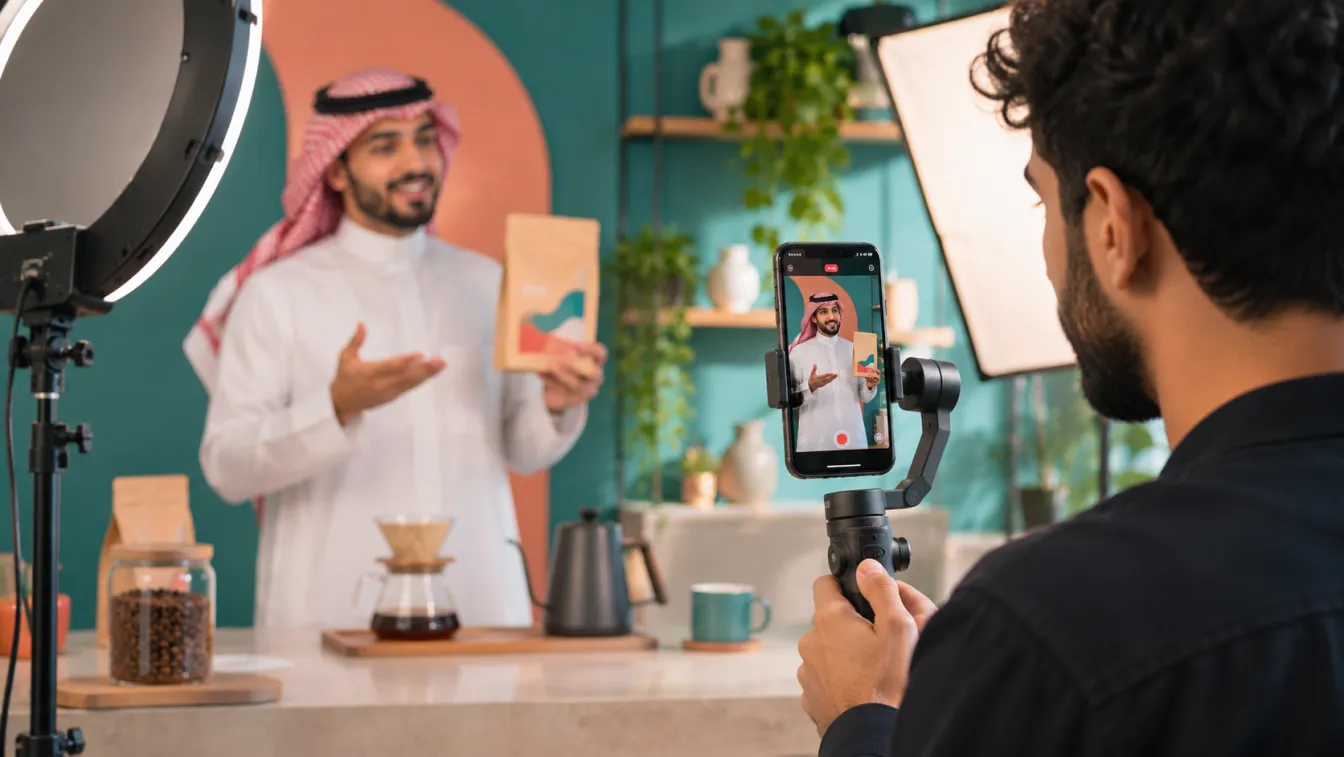

Successful influencer marketing is not simply paying a popular creator to mention your business. It is a planned collaboration between a brand and a relevant content creator, built around a clear audience, a suitable message, and a defined business objective. For Saudi businesses, choosing the right creator and managing the campaign professionally matter more than chasing visibility alone.
Whether you operate a restaurant, retail store, healthcare business, beauty brand, real estate company, or B2B service, influencer collaborations should fit your positioning and customer journey. The right campaign needs careful selection, creative direction, approvals, disclosure, and follow-up.
If you need a team to coordinate influencer content with your wider social media strategy, explore our social media management services in Saudi Arabia. This guide explains how to plan a campaign from the initial idea through publication and evaluation.
1. Define what your influencer marketing campaign should achieve
Start by deciding why your business wants to collaborate with a creator. A campaign without a clear objective can generate content without contributing meaningfully to your marketing priorities.
Common objectives include:
- Brand awareness: Introduce your business to an audience that may not know it yet.
- Product discovery: Demonstrate how a product works and explain its practical benefits.
- Service education: Help potential customers understand an unfamiliar service or buying process.
- Location awareness: Introduce a restaurant, retail branch, property development, or physical destination.
- Event promotion: Communicate an upcoming opening, exhibition, launch, or business event.
- Customer enquiries: Encourage interested people to request information or contact your business.
- Brand credibility: Present your offering through a creator whose content and audience are relevant to your industry.
For example, a hypothetical Saudi home furnishing store might want a creator to demonstrate how selected furniture pieces fit into a small apartment. The objective is to communicate practical product value rather than simply publish a photograph of the store.
Choose one primary objective and identify the action you want the audience to take. This will influence creator selection, content format, campaign messaging, and evaluation.
2. Understand the different types of influencers and creators
The most suitable creator is not necessarily the person with the largest public profile. Relevance, communication style, audience interests, and content quality should all influence your decision.
Consider these broad creator categories:
- Specialist creators: Produce content around a specific industry or subject, such as food, property, technology, beauty, or business.
- Lifestyle creators: Cover everyday experiences, shopping, dining, travel, and personal interests.
- Local creators: Focus on a particular city, neighbourhood, destination, or local community.
- Professional experts: Share knowledge connected to their professional background and can help explain complex subjects.
- Product reviewers: Demonstrate products, compare features, and explain practical experiences.
- Entertainment creators: Use storytelling, humour, or creative formats to communicate with their audiences.
For a hypothetical restaurant in Jeddah, a local food creator with relevant dining content may be more suitable than a general entertainment personality. For a B2B software company, a professional creator who explains business technology may provide a more relevant communication context.
Do not choose creators based only on their public follower count. Review their actual content, audience relevance, communication quality, and suitability for your brand.
3. How to select the right influencer in Saudi Arabia
Creator selection should be treated as a research and evaluation process, not an informal decision based on a profile photograph or a recommendation.
Before contacting a creator, review the following:
- Audience relevance: Does the creator regularly communicate with people who could reasonably be interested in your product or service?
- Geographic relevance: Does the content reach the Saudi locations or communities relevant to your business?
- Language and tone: Does the creator communicate naturally in the Arabic dialect or language style appropriate for your audience?
- Content quality: Are the videos, photography, storytelling, and captions professionally presented?
- Brand suitability: Does the creator's public content align with your business values and desired positioning?
- Engagement quality: Are comments and discussions relevant, meaningful, and consistent with the creator's content?
- Commercial transparency: Does the creator communicate sponsored collaborations clearly and professionally?
- Previous collaborations: Review how the creator presents other commercial partnerships and whether promotional content feels credible.
For businesses operating in several Saudi cities, local relevance may be particularly important. A restaurant targeting customers in Jeddah should evaluate whether a creator can communicate effectively with that local audience rather than assuming that general national visibility is sufficient.
A business searching for a social media agency in Riyadh should also consider whether its chosen creators support the intended geographic and commercial objectives.
Request a media kit or collaboration proposal where appropriate. It should help you understand the creator's content formats, audience profile, available platforms, and collaboration arrangements.
4. Prepare a clear influencer marketing campaign brief
Once you have identified a suitable creator, prepare a campaign brief before production begins. A written brief reduces misunderstandings and gives both parties a clear understanding of the collaboration.
Your brief should include:
- Campaign background: Explain the business, product, service, and reason for the collaboration.
- Campaign objective: Describe what the content should communicate or encourage.
- Target audience: Identify the customers the campaign is intended to reach.
- Key messages: List the essential information that must be communicated accurately.
- Creative direction: Explain the desired style, tone, format, and general presentation.
- Deliverables: Specify the agreed videos, Stories, photographs, captions, or other content assets.
- Publishing arrangements: Confirm the platforms, publishing schedule, and account responsibilities.
- Approval process: Identify who reviews the content and how revisions are handled.
- Disclosure requirements: Confirm how the commercial relationship will be disclosed appropriately.
- Usage permissions: Clarify whether the business can reuse the content on its own accounts or in paid advertising.
- Reporting: Agree on what campaign information and performance observations will be shared afterward.
Avoid controlling every word the creator says. The creator should retain an authentic communication style while respecting the campaign's essential messages and brand requirements.
However, creative freedom does not mean allowing inaccurate product claims, unsupported promises, or misleading statements. Important factual information should be reviewed before publication.
5. Choose the right content format and platform
A campaign should be designed around the creator, the audience, the business objective, and the platform rather than using one format for every collaboration.
Useful formats include:
- Instagram Reels: Suitable for demonstrations, product introductions, lifestyle storytelling, and visual experiences.
- Instagram Stories: Useful for short announcements, event coverage, direct responses, and campaign reminders.
- Snapchat videos: Suitable for conversational updates, location visits, informal experiences, and behind-the-scenes coverage.
- TikTok videos: Useful for creative demonstrations, storytelling, educational explanations, and personality-led content.
- X posts: Can support announcements, commentary, and concise recommendations where relevant to the creator's audience.
- LinkedIn content: Relevant to professional services, B2B businesses, industry discussions, and expert-led communication.
For example, a hypothetical beauty retailer might coordinate a product demonstration on Instagram, a conversational visit to its location on Snapchat, and an educational video on TikTok.
The content should feel appropriate to each platform. Avoid publishing identical material everywhere without considering presentation, context, and audience expectations.
6. Understand advertising disclosure and Saudi compliance
Commercial collaborations need to be handled transparently and in accordance with applicable requirements in Saudi Arabia.
Before launching a campaign, businesses and creators should understand the relevant advertising and media requirements, including those associated with the General Authority for Media Regulation (GCAM), influencer licensing where applicable, and commercial disclosure.
Mawthooq is relevant to certain influencer advertising activities. Businesses should not assume that every creator can automatically undertake every type of paid promotional activity without checking the applicable requirements.
Practical compliance considerations include:
- Verify whether the creator needs an applicable advertising licence or authorization for the planned activity.
- Ensure that paid partnerships and commercial relationships are disclosed clearly and appropriately.
- Review the wording of product and service claims before publication.
- Avoid misleading comparisons, unsupported guarantees, or statements that could create incorrect customer expectations.
- Check whether the advertised product or service is subject to additional sector-specific requirements.
- Obtain the appropriate permissions for filming, photography, and the use of personal images.
- Keep campaign briefs, approvals, agreements, and published content records.
Healthcare, financial services, beauty treatments, and regulated products may require additional review. Content involving medical claims, professional credentials, or restricted promotional activities should receive appropriate specialist attention before publication.
Requirements can depend on the nature of the activity and the parties involved. The client and creator should confirm the specific requirements with the relevant authority or a qualified adviser. General marketing guidance should not be treated as legal or regulatory approval.
7. Coordinate production and content approvals
A successful collaboration requires more than agreeing on an idea and a publishing date. The business needs a clear process for reviewing the creative material without creating unnecessary delays.
A practical workflow includes:
- Initial coordination: Confirm the campaign objective, deliverables, schedule, and responsibilities.
- Creative preparation: Share the campaign brief, product information, visual references, and key messages.
- Production: The creator prepares the agreed content using the approved direction.
- Internal review: Check factual accuracy, brand suitability, advertising disclosures, and required information.
- Revisions: Request necessary corrections while respecting the agreed creative scope.
- Final approval: Confirm that the content is ready for publication.
- Publishing: Coordinate the agreed publication schedule and campaign communication.
- Follow-up: Collect the agreed reporting information and document campaign observations.
Avoid leaving approvals until the last moment. This is particularly important during Ramadan, Eid, Saudi National Day, Founding Day, White Friday, and other seasonal periods when several campaign activities may be running simultaneously.
A dedicated campaign owner should coordinate communication between the business, creator, production team, and marketing agency.
8. Integrate influencer marketing with your wider marketing strategy
Influencer collaborations should not operate independently from your other marketing activities. They can support a wider campaign when the message, creative direction, and customer journey are aligned.
Consider how creator content can work alongside:
- Your regular Instagram, Snapchat, TikTok, and X publishing schedule.
- Product pages and service information on your website.
- Paid social advertising using appropriately authorized creative assets.
- Seasonal campaigns and promotional activities.
- Customer enquiry handling and community management.
- Brand identity, photography, and ongoing content production.
For example, a hypothetical property developer could coordinate a creator's project visit with its own property walkthrough videos, project information page, and customer enquiry process.
The creator introduces the experience, the business provides detailed information, and the marketing team coordinates follow-up communication.
Paid amplification should only be considered when the creative is suitable, the business has the required permissions, the campaign objective is clear, and the enquiry process is ready. Do not spend on advertising simply because a creator has published a video.
For more on coordinating paid campaigns, see our performance marketing services.
9. Evaluate campaign performance and commercial value
Campaign evaluation should consider more than public reactions. A useful review examines whether the collaboration reached the intended audience, communicated the right message, and supported the business objective.
Review the following areas:
- Content delivery: Were all agreed materials produced and published correctly?
- Audience relevance: Did the content reach people who match the intended customer profile?
- Message quality: Was the product, service, or business presented accurately?
- Audience response: What questions, comments, conversations, and enquiries followed publication?
- Traffic and enquiries: Where relevant, review website visits, tracked campaign links, and customer enquiries.
- Creative suitability: Which presentation styles and content formats were most appropriate for your business?
- Collaboration quality: Was communication clear, were deadlines respected, and were approvals handled professionally?
Do not assume that a campaign is commercially successful simply because a video received attention. Equally, do not dismiss a specialist creator because their content attracts a smaller but more relevant audience.
Compare the campaign's actual contribution with the original objective. Use the findings to improve creator selection, campaign briefs, content formats, and future collaboration decisions.
10. When should your business hire an agency?
Some businesses can coordinate occasional creator collaborations internally, especially when they already have a marketing manager, clear brand guidelines, and the capacity to manage communication and approvals.
An agency becomes useful when:
- You need to identify and evaluate several potential creators.
- Your campaigns involve multiple creators or platforms.
- You need professional creative direction and campaign briefs.
- Your team needs support coordinating filming, approvals, and publishing.
- You want influencer content integrated with ongoing social media management.
- You need Arabic and English campaign communication.
- Your campaigns require coordinated paid social advertising and content production.
However, do not hire creators or an agency simply because competitors are doing it. If your offer is unclear, your customer service is unprepared, or your business cannot handle incoming enquiries, improve those fundamentals first.
The cost of an influencer marketing campaign depends on creator selection, deliverables, production requirements, usage permissions, campaign duration, coordination, and advertising responsibilities. LtsThink prepares a fixed-price proposal after a short call to understand the campaign scope.
A good collaboration should have a clear purpose, appropriate creators, transparent communication, and an agreed process from briefing to evaluation.
Work with us: Looking for an influencer marketing agency in Riyadh or elsewhere in the Kingdom? If you want to coordinate influencer collaborations with your wider content strategy, creative production, community management, and paid social campaigns, explore our social media management services or learn about performance marketing in Saudi Arabia. LtsThink brings campaign planning, Arabic-first content, production, and social media management together in one workflow.
FAQ
What is influencer marketing?
It is a marketing approach in which a business collaborates with relevant content creators to communicate products, services, or brand messages to their audiences through agreed content and promotional activities.
How do I choose the right influencer in Saudi Arabia?
Evaluate audience relevance, geographic fit, language, content quality, brand suitability, engagement quality, commercial transparency, and applicable advertising requirements. Do not make the decision based on follower count alone.
What is Mawthooq and why does it matter?
Mawthooq is associated with licensing requirements for certain influencer advertising activities in Saudi Arabia. Businesses should verify whether the creator and planned activity meet the applicable requirements before launching a campaign.
Should I use influencer content in paid advertisements?
It can be useful when the content supports your campaign objective and you have the necessary creator permissions and advertising clearances. Confirm the intended usage, platforms, duration, and disclosure arrangements before promoting the content.