

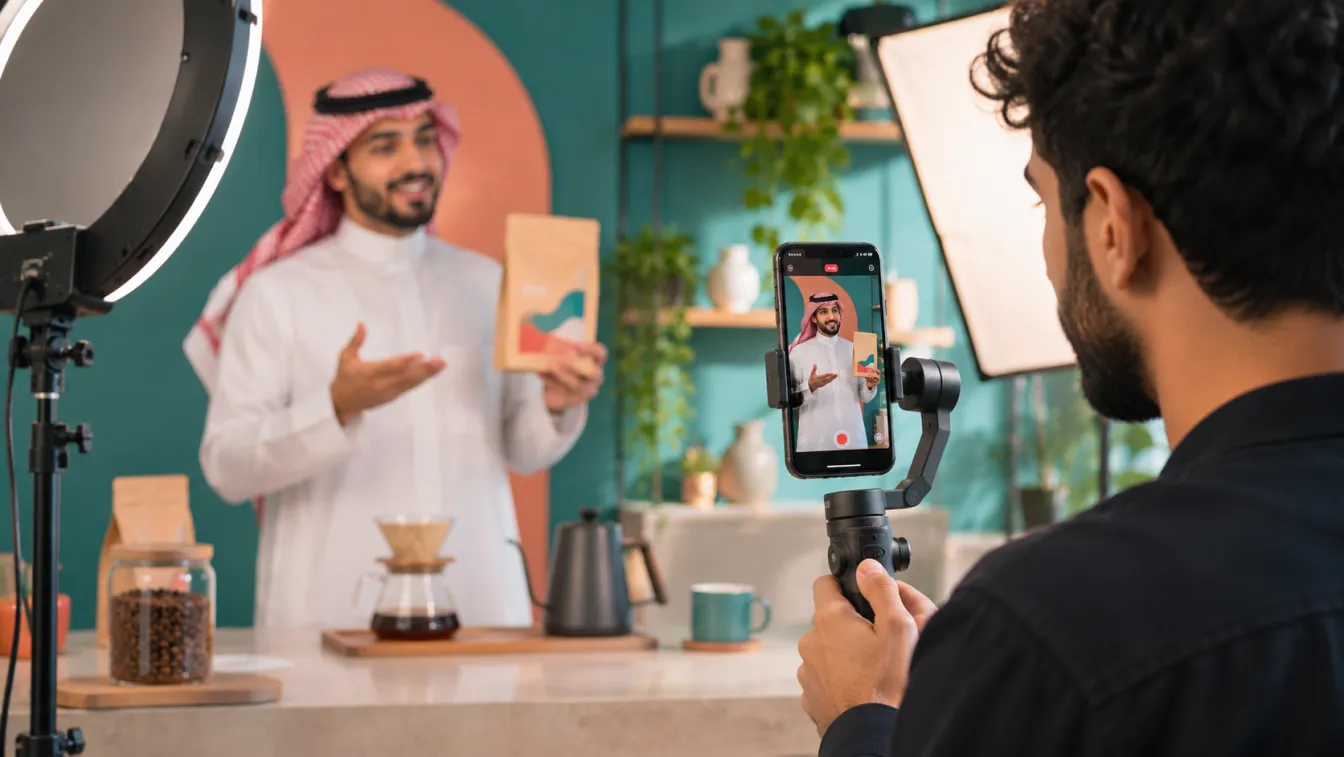
Effective social media video production starts with a clear business message, not a camera. Saudi businesses need videos that explain their products, introduce their services, communicate their brand personality, and give customers a reason to take the next step. The creative idea, script, filming, editing, and publishing format should all serve that purpose.
From Instagram Reels and Snapchat videos to TikTok content and LinkedIn presentations, every video needs a defined role. A planned production process helps your business create consistent content without relying on last-minute filming or copying whatever happens to be trending.
If your business needs a team to handle the wider process, explore social media management services in Saudi Arabia. This guide explains how to turn an initial idea into a finished video that is ready for your social media channels.
1. Start with the purpose of the video
Before writing a script or arranging a filming session, answer one question: what should this video accomplish for the business?
A video should have one main communication objective. Trying to introduce a company, explain several services, announce an offer, and answer customer questions in one short clip usually makes the message difficult to follow.
Common video objectives include:
- Brand awareness: Introduce the business, its identity, its approach, and the problem it helps solve.
- Product education: Demonstrate how a product works, explain its features, or show how it fits into everyday life.
- Service explanation: Make an unfamiliar service easier to understand through demonstrations, examples, or expert explanations.
- Customer confidence: Address common questions, explain processes, and introduce the people responsible for delivering the service.
- Campaign promotion: Support a product launch, seasonal offer, event, or specific marketing campaign.
- Customer enquiries: Encourage an appropriate next step, such as requesting information, visiting a location, or contacting the business.
For example, a hypothetical Saudi furniture retailer might create one video demonstrating a sofa's materials, another showing how a living room is styled, and a third explaining available delivery arrangements.
Each video has a distinct purpose, making it easier to develop a clear message and decide whether the final result is useful.
2. Develop creative concepts that fit your brand
The creative concept determines how your message will be presented. It includes the central idea, visual direction, storytelling approach, and intended audience response.
A strong concept does not need complicated production. A simple, well-executed explanation can be more useful than an elaborate video with no clear message.
Consider these content formats:
- Product demonstrations: Show the product in use, explain its features, and answer practical buying questions.
- Behind-the-scenes videos: Show preparation, production, team activities, or the daily operation of the business.
- Educational videos: Explain industry topics, common misconceptions, or useful customer information.
- Expert-led videos: Let a qualified professional explain a subject in a clear and accessible way.
- Problem-and-solution videos: Introduce a customer challenge and explain how the business addresses it.
- Location and project videos: Showcase a business location, property, facility, completed project, or working environment.
- Brand storytelling: Communicate the company's values, working philosophy, and identity through visual storytelling.
For a hypothetical property developer, a video might follow the progress of an apartment interior from an unfinished space to a completed room. The purpose is to help prospective buyers understand the design and finishing quality rather than simply display attractive footage.
Before approving an idea, check that it is relevant to your audience, consistent with your brand, practical to produce, and connected to a business objective.
3. Write a video script before filming
A script helps everyone involved understand what needs to be recorded. Even informal videos benefit from a simple structure.
A practical short-video script can follow this sequence:
- Opening hook: Introduce a question, problem, visual moment, or statement that gives viewers a reason to continue.
- Main message: Explain the product, service, idea, or information the video is about.
- Supporting detail: Add a demonstration, example, visual explanation, or relevant detail.
- Call to action: Tell viewers what they can do next.
For example, a hypothetical skincare retailer could open with a question about choosing a suitable cleanser, demonstrate the product's texture, explain its intended use, and invite viewers to contact the store for product information.
Keep the script conversational. A video should not sound like a formal brochure being read aloud unless that presentation is appropriate for the subject.
For educational or technical content, prepare the information carefully and have the relevant specialist review it. For promotional videos, confirm that the claims, product descriptions, and offer details are accurate before filming.
A useful production brief should also include:
- Video objective and target audience.
- Main message and supporting points.
- Intended platform and format.
- Script or speaking outline.
- Visual references and filming direction.
- Required products, people, locations, and equipment.
- Brand guidelines and language requirements.
- Approval responsibilities and delivery deadline.
4. Plan production before the filming day
Good video production depends on preparation. Arriving at a location with a camera and deciding what to film on the spot can waste time and produce inconsistent results.
Before filming, prepare a shot list that explains the footage required for each scene.
Your preparation should cover:
- Location: Confirm where filming will take place and whether permission is required.
- People: Identify presenters, employees, specialists, or other participants and coordinate their availability.
- Products and materials: Prepare the items, packaging, equipment, uniforms, or demonstration materials needed.
- Lighting: Consider natural light, artificial lighting, and the visual atmosphere of the location.
- Audio: Identify background noise, prepare microphones, and choose a suitable recording environment.
- Shot list: Specify wide shots, close-ups, demonstrations, presenter footage, and supporting scenes.
- Brand consistency: Prepare suitable colours, props, clothing, and visual references.
- Approvals: Confirm that the business has authorized the filming location, participants, and content.
A planned filming session can produce several related videos. For instance, a hypothetical restaurant could record food preparation, ingredient details, chef explanations, and dining-area footage during the same production session.
The footage can then be edited into separate videos with different messages rather than publishing one long recording repeatedly.
5. Social media video production for Saudi platforms
Different platforms create different content expectations. The original video idea can be reused, but the final editing and presentation should reflect the platform where it will appear.
Instagram Reels
Reels are useful for visual storytelling, product demonstrations, educational clips, brand introductions, and behind-the-scenes content.
Focus on a clear opening, visually engaging footage, readable on-screen text, and a message that makes sense without requiring a long explanation.
Snapchat
Snapchat content can feel more immediate and conversational. It works well for daily updates, location-based business communication, informal demonstrations, and behind-the-scenes footage.
Keep the presentation natural and make sure promotional messages remain clear.
TikTok
TikTok is suitable for creative short videos, demonstrations, educational explanations, and personality-led communication.
A useful approach is to develop a recognizable content format that the business can produce consistently instead of depending entirely on temporary trends.
LinkedIn videos can support professional communication, company introductions, project explanations, industry knowledge, and expert commentary.
For B2B businesses, focus on useful information and credibility rather than forcing consumer-style entertainment into every video.
X
Video on X can support announcements, short explanations, event updates, and commentary. Make the central message understandable quickly and include appropriate context in the accompanying post.
When planning a production, specify the intended platforms from the beginning. This makes it easier to determine framing, editing, subtitles, and the final delivery requirements.
6. Create Arabic-first videos for Saudi audiences
Language is a creative decision, not simply a translation task.
A Saudi business communicating with local customers should consider how its audience naturally speaks and what tone is appropriate for its industry.
Useful approaches include:
- Natural Saudi dialect: Suitable for conversational product videos, informal explanations, everyday service introductions, and Stories when consistent with the brand personality.
- Modern Standard Arabic: Suitable for formal announcements, educational information, professional explanations, and detailed service communication.
- English: Appropriate when the intended audience, industry, or brand identity requires English communication.
- Arabic and English versions: Useful when a business serves different language audiences and needs consistent messaging across both.
For example, a hypothetical interior design studio might use natural Saudi Arabic in a video discussing common home-design preferences, while producing a more formal Arabic presentation about its project process.
Subtitles should be considered during editing rather than added as an afterthought. Check spelling, readability, timing, and the placement of text so that important information is not hidden by platform interface elements.
For businesses publishing in both languages, maintain the same central message while adapting the wording naturally. Literal translations can make a brand sound unnatural or inconsistent.
7. Film and edit for a professional result
Professional-looking video is the result of several production decisions working together. Expensive equipment alone does not guarantee a useful result.
Pay attention to the following elements:
- Composition: Keep the subject clear and remove unnecessary distractions from the frame.
- Lighting: Make sure products, people, and important details are visible.
- Audio quality: Record clear speech and control distracting background noise.
- Camera stability: Use suitable support or movement techniques to avoid distracting footage.
- Editing rhythm: Remove unnecessary pauses and arrange scenes in a logical sequence.
- Colour consistency: Keep the visual appearance aligned with the brand identity.
- Subtitles: Make spoken information accessible and easier to follow without sound.
- Brand elements: Use logos, colours, typography, and graphic treatments consistently.
- Export quality: Deliver files in the appropriate dimensions and format for the intended platform.
During editing, do not add effects simply because they are available. Transitions, animations, music, and visual effects should support the message rather than distract from it.
Music and other creative assets should be properly licensed or otherwise cleared for the intended commercial use. The business should also ensure that people appearing in the content have provided the appropriate permissions.
8. Turn one filming session into a content library
A well-planned production session should create material that can support more than one publication.
Instead of recording a single video and moving to another topic, identify opportunities to capture related footage during the same session.
A hypothetical healthcare centre, for example, might prepare:
- An introduction to a service.
- A specialist explaining a common general health question.
- A walkthrough of the facility.
- A short explanation of the appointment process.
- A behind-the-scenes introduction to the team.
- Supporting footage for future educational videos.
Each asset should have its own purpose, audience, and approval requirements. Healthcare content in particular needs appropriate professional review, patient privacy protection, and attention to applicable advertising requirements.
This approach makes production planning more organized and helps the business maintain a useful library of reusable footage.
It is also important to distinguish between repurposing and simply reposting. Repurposing means adapting footage, messaging, and editing to create a new piece of content with a relevant purpose.
9. Measure video quality beyond views
Views can help describe how a video was distributed and consumed, but they do not explain its complete business value.
Evaluate video content using several considerations:
- Message clarity: Can viewers understand what the business offers?
- Audience relevance: Does the topic address a genuine customer interest or question?
- Content quality: Are the footage, audio, subtitles, and presentation appropriate for the brand?
- Customer response: Does the video generate useful questions, enquiries, or conversations?
- Production efficiency: Was the video delivered within the planned production and approval workflow?
- Business relevance: Does the content support a service, product, campaign, or communication priority?
For paid video campaigns, assess the creative alongside the campaign objective and the quality of the resulting enquiries. A video that attracts attention but communicates the wrong offer may not be useful to the business.
Use these observations to improve future scripts, concepts, production briefs, and editing decisions.
10. When should you hire a video production or social media agency?
You do not necessarily need an external production team for every video. A business with a capable internal marketer, suitable equipment, clear brand guidelines, and straightforward content requirements may be able to produce some material internally.
However, professional support becomes useful when:
- You need regular, coordinated filming and editing.
- Your team lacks the time or skills to produce consistent video content.
- Your business requires professional photography, presenters, or location production.
- You need Arabic-first creative alongside English versions.
- Multiple platforms require different edits and formats.
- Your seasonal campaigns need dedicated creative production.
- You want video production coordinated with account management and paid social campaigns.
Before hiring an agency, make sure your business has a clear offer, understands its intended audience, and can handle customer enquiries. If these fundamentals are missing, clarify the marketing direction before committing to extensive production or advertising.
When evaluating an agency, review its creative process, production capabilities, approval workflow, content ownership arrangements, and ability to coordinate with your internal team.
The cost of production depends on the creative concept, filming locations, number of production requirements, participants, editing complexity, deliverables, and whether ongoing account management is included. LtsThink provides a fixed-price proposal after a short call to understand the scope.
Work with us: Need social media video production in Riyadh or elsewhere in the Kingdom? If your business needs planned creative concepts, professional filming, Arabic-first scripts, editing, and coordinated publishing, explore our social media management services or read our guide to building a social media content calendar for Saudi businesses. LtsThink brings strategy, photography, video production, and social media management together in one workflow.
FAQ
What is social media video production?
It is the complete process of developing a video concept, preparing a script, organizing filming, recording footage, editing the material, and delivering platform-ready content for social media.
What types of videos should Saudi businesses produce?
Useful formats include product demonstrations, educational videos, behind-the-scenes footage, service explanations, expert presentations, brand stories, and seasonal campaign videos. The right mix depends on your industry and business objectives.
Should I produce separate videos for Instagram, Snapchat, and TikTok?
Not necessarily. You can start with the same central idea or original footage, then adapt the framing, editing, subtitles, captions, and presentation for each platform. Some concepts may also need separate recordings.
Can a business produce professional social media videos in-house?
Yes. Internal production can work when the business has suitable skills, equipment, time, and clear creative direction. An external team becomes useful when production requirements, quality expectations, or publishing responsibilities exceed internal capacity.