
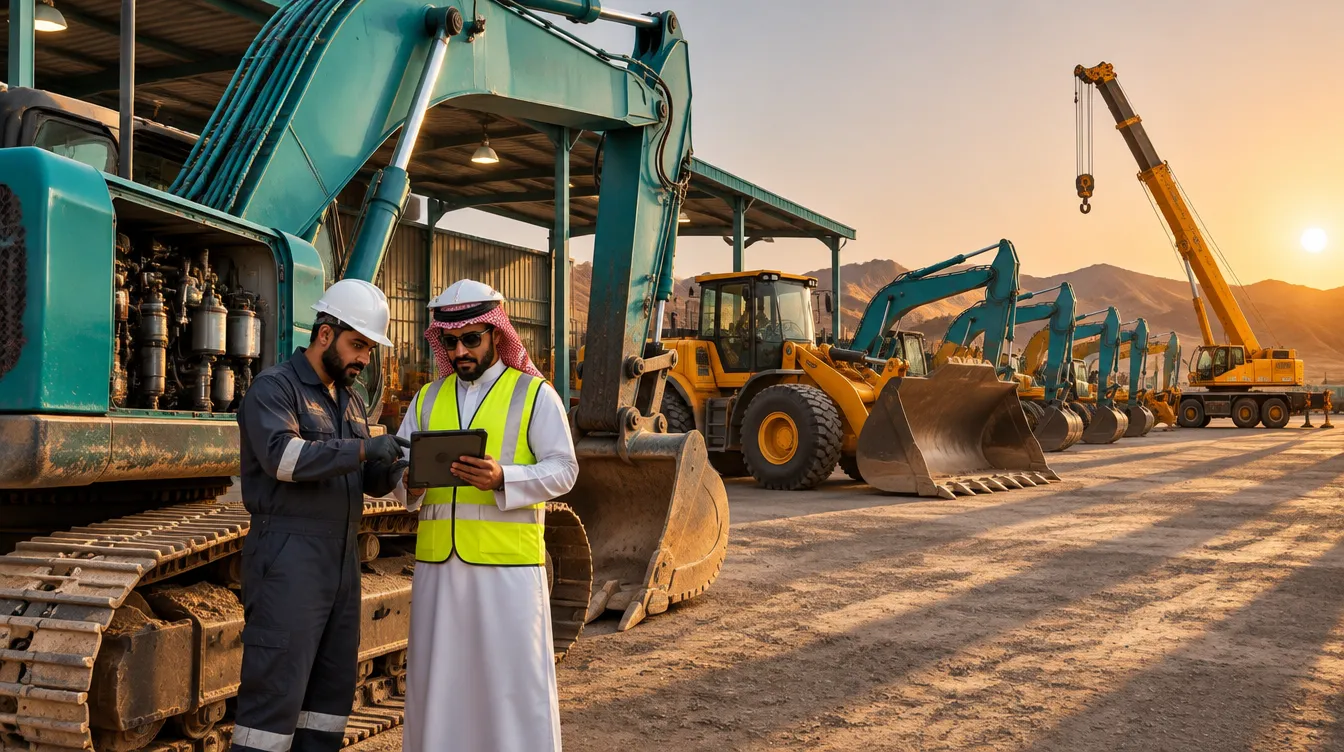
Construction equipment management is essential for contractors who need to keep machinery available, control operating costs and understand how equipment contributes to project performance. Excavators, cranes, loaders, generators, vehicles and specialist tools all create costs whether they are working, idle, under maintenance or waiting to be allocated. Without reliable records, management cannot easily determine where equipment is, who is responsible for it or whether it is being used economically.
A connected contracting ERP system helps link equipment registers, project allocations, operating hours, maintenance records, fuel, rental agreements and cost reporting instead of managing these activities through separate spreadsheets and informal site updates.
What construction equipment management includes
Construction equipment management covers the complete lifecycle of machinery and tools used to deliver construction projects. It starts with registering and classifying equipment, then continues through allocation, operation, inspection, maintenance, transfer and eventual disposal or replacement.
The equipment portfolio may include:
- Heavy machinery such as excavators, bulldozers, loaders, graders and rollers.
- Lifting equipment such as cranes, forklifts, hoists and lifting accessories.
- Concrete equipment such as batching equipment, pumps, mixers and vibrators.
- Power and site equipment such as generators, compressors and welding machines.
- Transportation assets such as trucks, trailers, buses and service vehicles.
- Surveying equipment, testing instruments and specialist tools.
- Small tools and equipment assigned to individual teams or site locations.
Each asset should have a unique identifier and a record containing its specifications, ownership status, location, responsible department, operating condition and relevant documentation.
Why contractors lose control of equipment
Equipment problems are often caused by fragmented information rather than a lack of machinery. The procurement team may maintain purchase records, the workshop may track maintenance separately, and site managers may report utilization through messages or spreadsheets.
Common problems include:
- Unclear equipment location: Management cannot confirm which project or site currently holds an asset.
- Poor allocation decisions: Equipment is rented or purchased while suitable machinery is idle elsewhere.
- Unrecorded operating hours: Usage records are incomplete or entered after the fact.
- Reactive maintenance: Repairs begin only after breakdowns interrupt site operations.
- Uncontrolled fuel consumption: Fuel issues are not consistently linked to equipment, operators or operating hours.
- Unclear responsibility: Inspection, operation and handover responsibilities are not documented.
- Hidden rental costs: Rental periods continue while equipment is unused or no longer required.
- Weak cost allocation: Equipment expenses are not consistently assigned to the projects that use the assets.
These gaps make it difficult to distinguish a genuine capacity shortage from poor allocation, excessive idle time or maintenance delays.
Construction equipment management: A practical operating workflow
An effective process should connect equipment ownership, availability, site demand, usage and financial performance.
1. Build a reliable equipment register
Start with a central register covering owned, leased and rented equipment. Do not treat every asset as company-owned: ownership and rental status affect financial treatment, insurance, maintenance responsibilities and replacement decisions.
A useful equipment record includes:
- Unique asset number and equipment category.
- Manufacturer, model and serial number.
- Purchase or rental reference.
- Ownership or lease status.
- Purchase date or rental start date.
- Technical specifications and rated capacity.
- Current location and assigned project.
- Responsible department or custodian.
- Registration, inspection and insurance documents where applicable.
- Current condition and availability status.
For vehicles and regulated machinery, retain relevant registration, inspection and operating documentation. The responsible compliance team should confirm applicable Saudi requirements for each equipment category and operating environment.
2. Plan equipment requirements by project
Equipment demand should be identified during project planning and updated as work progresses. The project team should specify the equipment type, capacity, quantity, expected working period and site location.
Review the requirement against:
- Project schedule and upcoming activities.
- Construction method and site conditions.
- Equipment capacity and technical suitability.
- Existing fleet availability.
- Planned maintenance and inspection periods.
- Transportation and mobilization requirements.
- Rental options and commercial conditions.
For example, a project may need a crane for a defined lifting activity. Before arranging a rental, the equipment manager should check whether a suitable company-owned crane is available, whether its capacity matches the lifting plan and whether mobilization can meet the required date.
This process reduces avoidable rental commitments and helps prevent equipment shortages from disrupting planned work.
3. Allocate equipment and record transfers
Every allocation should identify the asset, project, site, responsible person and expected assignment period.
An equipment transfer record should capture:
- Asset identification.
- Sending and receiving locations.
- Previous and new project allocation.
- Transfer date and expected return date where relevant.
- Condition at dispatch and receipt.
- Operator or custodian responsible.
- Approval and supporting documents.
When equipment moves between sites, update its location and availability. Without a controlled transfer process, two project managers may assume that the same asset is available to them.
For rented equipment, record delivery, acceptance, rental commencement, off-hire request and collection. These dates should be checked against supplier invoices and rental terms.
4. Capture operating hours and utilization
Equipment utilization should be based on consistent operating records rather than estimates made at month-end.
Depending on the asset, record:
- Engine or meter readings at the start and end of a shift.
- Actual operating hours.
- Idle hours and reasons for inactivity.
- Operator identity.
- Project and work activity.
- Fuel issued or consumed.
- Operating condition and reported defects.
Utilization should be interpreted in context. A crane may be required only for specific lifting activities, while an excavator may be expected to operate throughout a planned earthworks shift. Comparing both assets against one utilization target would produce misleading conclusions.
Management should distinguish available time, scheduled time, actual operating time, idle time and maintenance downtime. This helps identify whether equipment is underused because of poor planning, unavailable operators, site access restrictions or a genuine lack of work.
5. Schedule preventive maintenance and inspections
Maintenance should be planned according to manufacturer guidance, operating conditions, inspection requirements and the company's maintenance policy.
A maintenance record should include:
- Equipment identifier and current meter reading.
- Maintenance type and work description.
- Planned service date or operating-hour trigger.
- Inspection findings and reported defects.
- Spare parts and materials used.
- External workshop or service provider.
- Labour and service costs.
- Equipment downtime and return-to-service approval.
Preventive maintenance helps the company plan workshop capacity and reduce avoidable interruptions. It does not eliminate breakdowns, so the process should also record corrective maintenance, failure causes and follow-up actions.
Equipment with unresolved safety or technical defects should not be returned to operation simply because a project needs it. Inspection and release responsibilities must remain clear.
6. Control fuel, repairs and operating costs
Equipment costs extend beyond the original purchase or rental charge. A contractor should understand the total cost of keeping an asset available and operating it.
Relevant cost categories include:
- Purchase or lease costs.
- Rental charges and related transportation.
- Fuel and lubricants.
- Operator and maintenance labour.
- Spare parts and workshop services.
- Tires, batteries and consumables.
- Insurance, registration and inspections where applicable.
- Mobilization, demobilization and storage.
- Repairs and replacement components.
Fuel transactions should be associated with the equipment identifier, date, quantity, project and operator or issuing party where practical. Unusual consumption should be investigated using operating hours, equipment condition, work type and site conditions rather than assuming that every variance indicates misuse.
Cost allocation rules should also be consistent. Owned equipment may require an internal usage rate or another approved allocation method, while rented equipment may be charged according to the rental agreement. Finance and commercial teams should agree how these costs are reflected in project reporting.
Connecting equipment management with project cost control
Equipment is a project resource and its costs should be visible alongside labour, materials, subcontractors and other direct expenses.
A connected process links:
- Project equipment requirements and planned activities.
- Asset availability and allocation records.
- Operating hours and utilization.
- Fuel and maintenance transactions.
- Rental agreements and supplier invoices.
- Equipment transfers and downtime.
- Project cost codes and financial reports.
This connection helps project managers understand whether machinery costs are consistent with the work performed and whether a project is relying too heavily on external rentals.
For example, if an excavator is assigned to a project but records show extended idle periods, management can investigate whether the cause is site readiness, operator availability, material access or an inaccurate equipment plan. The answer may be to reallocate the asset, revise the schedule or address an operational constraint.
Equipment allocation should also reflect changes in project scope. When a revised work sequence requires additional machinery, the project team should review the budget, existing fleet and rental commitments before arranging new equipment.
What an equipment management dashboard should show
A useful dashboard should provide a current view of the fleet and explain how equipment is performing across projects.
Important indicators include:
- Fleet register: Total assets by category, ownership and operating status.
- Equipment location: Current project, site or workshop location.
- Availability: Equipment available, allocated, rented, under maintenance or awaiting inspection.
- Utilization: Operating hours compared with the relevant scheduled or available period.
- Idle time: Unused equipment and recorded reasons for inactivity.
- Maintenance schedule: Upcoming services, overdue tasks and open defects.
- Downtime: Time out of service and reasons for interruption.
- Fuel consumption: Fuel transactions and consumption patterns by asset.
- Rental exposure: Active rental agreements, expected return dates and off-hire status.
- Cost by project: Fuel, repairs, rentals and allocated equipment costs.
A dashboard should allow users to investigate an asset from its register entry through allocation, operating records, maintenance history and project cost transactions.
How ERP supports construction equipment management in Saudi Arabia
A contractor-focused ERP can connect equipment records with project management, procurement, inventory, maintenance, HR and finance.
Relevant capabilities include:
- Centralized equipment and vehicle registers.
- Owned, leased and rented asset classification.
- Project-based equipment requests and approvals.
- Allocation, transfer and return workflows.
- Operating-hour and meter-reading records.
- Preventive and corrective maintenance schedules.
- Spare-parts inventory and workshop transactions.
- Fuel issue and consumption tracking.
- Rental agreement and supplier invoice management.
- Equipment cost allocation by project and cost code.
- Mobile inspection and site reporting.
- Document expiry and inspection reminders.
For contractors evaluating construction ERP in Riyadh or construction ERP in Jeddah, the important question is whether equipment activity can be connected to project schedules, site operations and financial commitments.
LtsThink, خلينا نفكر, implements Odoo for contractors and develops custom ERP systems when standard applications and configuration do not adequately support the company's equipment, maintenance and project workflows.
Explore the contracting ERP solution and our Odoo construction ERP implementation service to understand how equipment records can connect with the wider project operation.
When should a contractor automate equipment management?
Automation becomes valuable when equipment location is unclear, rental periods are difficult to control, maintenance is frequently reactive, operating-hour records are unreliable or equipment costs cannot be traced to projects.
However, a small contractor with a limited fleet may not need a complex platform immediately. A controlled equipment register, standardized daily operating logs, maintenance calendar and documented allocation process may provide a suitable starting point.
Do not buy a fleet telematics platform simply because the company needs an equipment register. Telematics can provide location, engine and sensor data when compatible devices are installed, but it does not automatically manage project allocation, rental agreements, maintenance approvals or financial cost allocation. Those workflows still need an operational system and clear responsibilities.
Before selecting software, establish:
- Who owns the equipment register?
- Who approves project allocations and transfers?
- Who records operating hours and fuel issues?
- Who schedules maintenance and releases equipment after inspection?
- How are rental periods and off-hire dates controlled?
- How are equipment costs allocated to projects?
A system should reinforce these responsibilities rather than replace them with unclear automation.
Odoo or custom ERP for construction equipment?
Odoo can provide a foundation for equipment-related workflows when its standard applications and configuration support the company's requirements for maintenance, inventory, purchasing, projects and accounting. LtsThink implements Odoo and adapts workflows where required.
A custom ERP may be more suitable when the contractor needs specialized fleet allocation, detailed equipment costing, complex rental controls, integration with telematics devices or links to existing maintenance and operational systems.
The decision should be based on the complete equipment lifecycle rather than a standalone asset register. Review how the company requests, allocates, operates, maintains, transfers and costs equipment before choosing the platform.
Start with a review of the fleet register, maintenance history, rental agreements, fuel records and project cost reports. Identify the most important control gaps, then implement the required workflows in manageable phases.
Work with us: Explore contracting ERP software from LtsThink to connect equipment allocation, site operations, maintenance, rentals and project cost control. You can also read our guide to construction material procurement or contact our team to discuss your equipment workflows. We define the implementation scope after understanding your actual operations and provide a fixed-price proposal after a discovery visit.
FAQ
What does construction equipment management include? It includes registering equipment, planning project requirements, allocating assets, recording operating hours, managing inspections and maintenance, tracking fuel and repairs, and monitoring equipment costs.
How can contractors improve equipment utilization? Maintain accurate allocation and operating-hour records, compare actual usage with the work schedule, identify idle equipment and review whether assets can be reassigned before arranging additional purchases or rentals.
How should equipment maintenance be managed? Use planned maintenance schedules based on manufacturer guidance, operating hours and inspection requirements. Record defects, repairs, spare parts, downtime and approval before returning equipment to service.
Can ERP track equipment costs by project? Yes. When equipment records are connected to project cost codes, the system can consolidate relevant fuel, maintenance, rental, repair and allocated equipment expenses for project reporting.
Does a contractor need telematics as well as ERP? Not always. Telematics is useful when live location, engine or sensor data is required and compatible devices are installed. ERP manages the wider allocation, maintenance, purchasing and financial workflows that telematics alone does not cover.